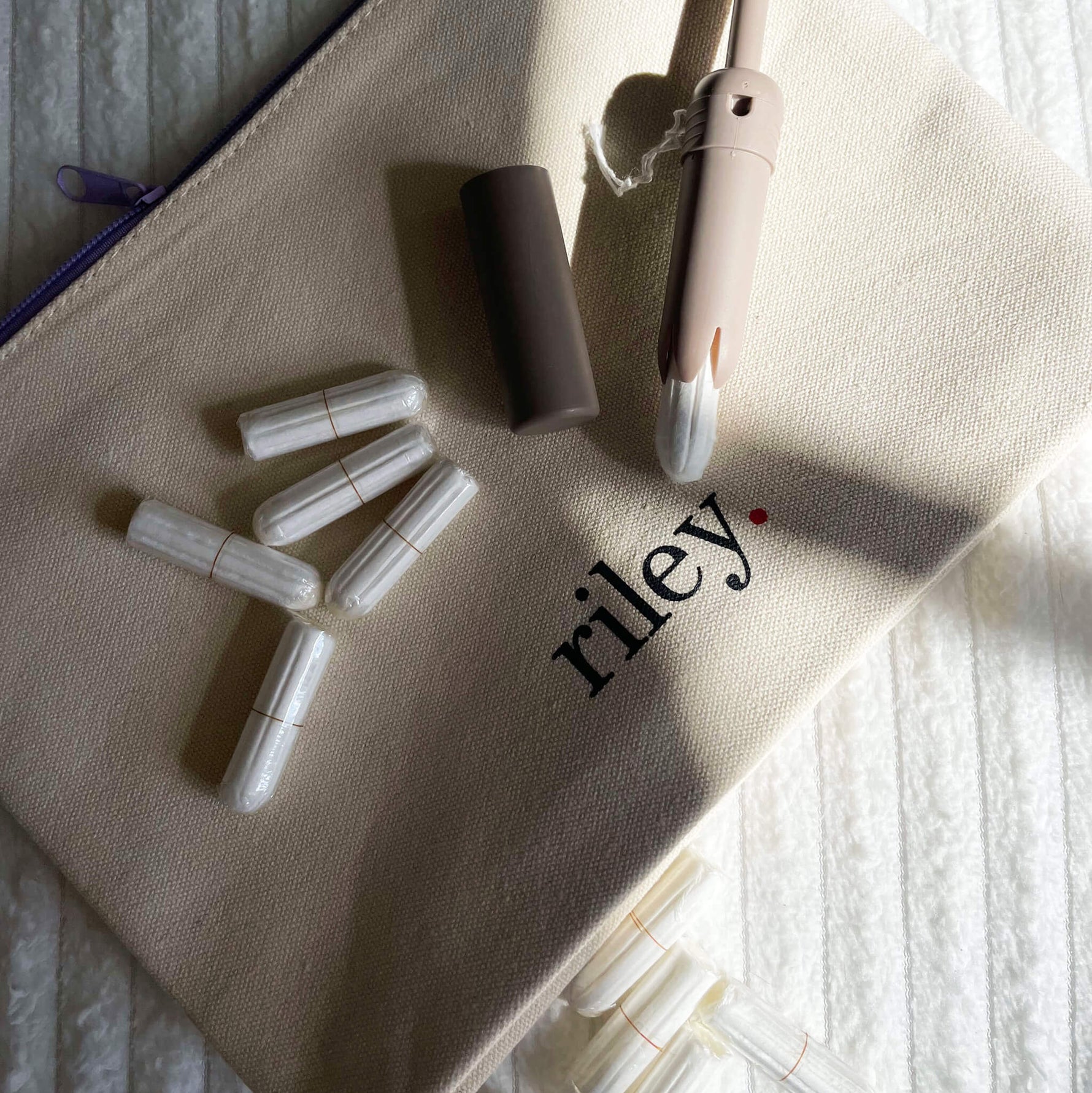
Say goodbye to single-use plastic with our patented Reusable Applicator.
Paired with our 100% certified organic cotton Naked Tampons. A match made in heaven.
3999
€39.99
Unit price/ per
One Time Purchase
Tampon Absorbency Level
Mixed
€39.99
0
Regular
€39.99
0
Super
€39.99
0
Ditch single-use plastic for good. Our patented Reusable Applicator, paired with 100% certified organic cotton Naked Tampons, is the perfect planet-friendly duo for your cycle.
Bundle includes 1 x Reusable Applicator, 1 x Canvas Storage Pouch & 2 Naked Tampon boxes with absorbency of your choice.
Did you know that your tampon should always be soaked in blood when removed?
It's so important to use the right absorbency to suit your flow. Everyone's period flow changes throughout their menstrual phase. Here's a full breakdown of when to use each absorbency and remember to change your tampon frequently (we recommend every 3-4 hours):
Regular Absorbency:
🩸🩸 6-9 grams
Can be used for medium flow periods or in the middle of menstruation
Super Absorbency:
🩸🩸🩸 9-12 grams
Can be used for heavy flow periods or at the beginning of menstruation
Free shipping over €50 or £45
Once your order is packed up and on its way, we’ll send you a tracking link so you can keep an eye on things. Depending on where you're based, our shipping times can vary:
Made from 100% organic cotton, these are biodegradable. However, for hygiene reasons, we recommend wrapping used tampons in tissue or their biodegradable wrapper and disposing of them in the general waste bin. They should never be flushed, as they can cause blockages and harm marine life.
Tampon Wrapper:
Made from NatureFlex biodegradable cellophane, this can go in your compost binifindustrial composting is available locally. Otherwise, dispose of it in general waste, where it will still break down safely.
Reusable Applicator:
When it’s time to part ways after 2 years of use, the applicator should be placed in general waste. It’s not currently recyclable through household systems due to the specialist material. However, using just one reusable applicator in place of 200 single-use ones makes a significant impact.
Small changes, big difference.
For more information on how to dispose of Riley products, read our blog article here.
Your bundle includes:
1 x Reusable Applicator 2 x Naked Tampon Pouches (24 tampons) 1 x Canvas Storage Pouch
At Riley, we're committed to fighting against period poverty by donating products to those in need, sponsoring doctor-led menstrual health programs and partnering with charities that support vulnerable communities.
1% of every purchase helps us provide dignified, sustainable period care to people who might otherwise go without.
Step 1:
Load It Up
Unwrap a Naked Tampon and insert it gently into the open end of your reusable applicator. Ensure the string is hanging out of the string slot.
Step 2:
Position & Insert
Hold the bottom of the outer tube, position the tip of the applicator at your vaginal opening and gently insert.
Step 3:
Push & Remove
Once the outer tube is fully inserted, use the pusher to release the tampon. Then gently remove the applicator.
Step 4:
Remove & Reuse
Rinse your applicator with warm water, let it dry and it’s ready to use again next time.
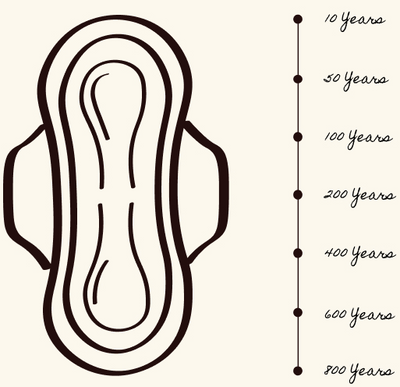
Every mainstream sanitary pad you ever used still exists.
Period Products That Don’t Outlive You.
Period products are the fifth most common single-use plastic in Europe’s beaches, ranking higher than straws and coffee cups. Unlike microplastics, pads, which are made up of 90% plastic and live on our planet for 600 years, are not compostable meaning they won’t end up in landfill.
Did you know?
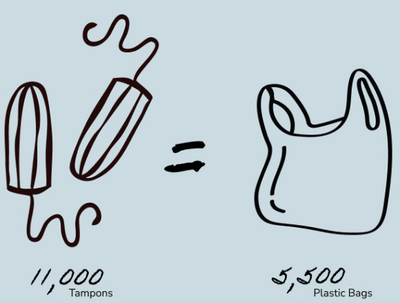
The average person uses 11,000 mainstream tampons in their lifetime? That’s the equivalent of 5,500 plastic bags!
When we talk about human rights, we’re really talking about the things that help us live with dignity - safety, freedom, education, opportunity. But there’s one essential part of everyday life that rarely makes it into the conversation: menstruation.
For half of the world, period products are as essential as soap or clean water. They’re something people rely on quietly, every single day. Yet for millions, these basics are still out of reach.
So on Human Rights Day 2025, we’re choosing to shine a light on something often overlooked but deeply important to us: period poverty - and the dignity, access, and education every person deserves.
What Period Poverty Really Means 🩸
Period poverty isn’t just about not being able to afford pads or tampons. It’s about feeling shame, missing school, skipping work, and being denied the freedom to participate fully in life.
It’s a global reality affecting 500 million people, and it’s kept alive by stigma - the kind that stops honest conversations before they even begin.
When people can’t talk about periods, they can’t talk about access, safety, ingredients, or education. And when we can’t talk, we can’t change anything.
The Human Cost, In Numbers
These statistics represent real people, real students, real families, real experiences:
48% of young women feel shame or embarrassment about their period
40% of girls in the UK have had to use toilet roll instead of proper products
50% of girls and young menstruators in Ireland struggle to afford period products
52% of teenage girls have missed school or college because of their period
Behind each number is someone trying their best to manage a natural part of life without the essentials they deserve.
Why Menstruation Is a Human Rights Issue
This year’s Human Rights Day theme, Our Everyday Essentials, is a reminder that dignity lives in the details - in the small things we reach for without thinking.
Period products are one of those things.
To truly support human rights, we must recognise that:
Everyone deserves access to safe, affordable period products
No one should feel shame about their body
Periods shouldn’t interrupt education or opportunity
Menstrual health is fundamental to wellbeing
When dignity is compromised, human rights are compromised, too.
Our Impact - Powered by You 💪
This work has only been possible because of the incredible people in our community and our dedicated charity partners. Your support — whether through buying our products, sharing our mission, or simply caring - has a real-life impact.
Together, we’ve:
💧 Donated 196,816 period products
Helping thousands manage their periods safely and comfortably.
💛 Contributed €64,606 in monetary donations
Supporting local communities and on-the-ground partners.
📚 Delivered 71 menstrual health seminars
Bringing education and confidence directly into Kenyan schools.
🌍 Reached 9,000+ students with essential information
Empowering the next generation to understand their bodies without stigma.
These achievements aren’t just ours - they’re yours. Every step forward has been powered by a community that believes in dignity, access, and change.
Looking Toward a More Dignified Future 🌎
We picture a world where:
No one has to miss school because of their period
No one chooses between food and pads
No product is too expensive, too inaccessible, or too taboo to talk about
Period dignity is simply a given - as it should be
Human Rights Day is a reminder of how much work there is to do, but also of the incredible progress we can make together.
Join Us in Making Period Dignity a Reality ❤️
Every conversation, every shared post, every purchase with impact contributes to change. You’re helping build a future where period dignity isn’t questioned - it’s guaranteed.
Thank you for standing with us. Thank you for believing in this mission.And thank you for helping create a world where dignity is part of everyone’s everyday essentials ❤️
When we think of periods, we don’t often think of potential. But science is changing that.
It turns out your menstrual blood isn’t just blood - it’s a rich biological fluid that contains stem cells. And these cells are now being studied for their ability to repair, regenerate, and heal tissue across the body.
What Are Menstrual Stem Cells? 🩸
Stem cells are special because they can develop into many different types of cells - like bone, muscle, nerve, or heart cells. Most people have heard about stem cells being taken from bone marrow or umbilical cords, but researchers have discovered another incredible source: the cells shed during menstruation.
These menstrual stem cells (sometimes called endometrial stem cells) are found in the lining of the uterus - the same lining that regenerates every month. This natural cycle of growth and renewal makes menstrual stem cells especially unique and promising for regenerative medicine.
What Can They Do? 💪
While research is still in the early stages, menstrual stem cells have shown amazing potential in laboratory and early clinical studies.
In human trials, researchers are exploring their use in:
🫀 Repairing heart tissue after heart attacks
🩺 Restoring ovarian function in cases of premature ovarian failure
🥚 Improving fertility outcomes in people with poor ovarian response
And in animal studies, menstrual stem cells have been tested for:
🧠 Neurodegenerative diseases like Parkinson’s and Alzheimer’s
🩻 Healing spinal cord injuries❤️ Accelerating wound healing and tissue repair💉 Improving recovery after strokes
Why This Matters 🧬
Traditionally, stem cell collection can be invasive or ethically complex. Menstrual stem cells, however, are non-invasive, renewable, and easily collected from something that’s naturally discarded each month.
That makes them a game-changer in how we think about both women’s health and medical innovation.
The Bigger Picture 🌸
Menstrual health has long been overlooked or even stigmatised. But this research reminds us of something powerful: our bodies are capable, intelligent, and full of potential.
The next time your period comes around, remember - your body isn’t just shedding. It’s renewing, regenerating, and carrying within it the blueprint for healing.
Sources:
Patel, A.N. et al. (2008). “Multipotent menstrual blood stromal stem cells: isolation, characterization, and differentiation.” Cell Transplantation.
Cui, C.H. et al. (2007). “Menstrual blood-derived cells confer therapeutic benefits in animal models of disease.” Stem Cell Research & Therapy.
Ding, D.C. et al. (2015). “Human menstrual blood-derived stem cells: characteristics and therapeutic potential.” Cell Transplantation.
If you’re like most women, you probably weren’t taught much about breast health growing up. Beyond puberty, conversations about how our breasts change - and what’s normal - are often left out of health education.
This October, for Breast Cancer Awareness Month, we’re breaking that silence. We’ll explore how breast tissue evolves through different life stages, why “knowing your normal” is key to early detection, and how regular awareness can empower you to take charge of your health.
Why Early Detection Matters
Breast cancer is the second most common cancer worldwide, affecting millions each year. According to the World Health Organisation, over 2 million new cases are diagnosed annually, and 670,000 lives were lost to breast cancer in 2022.
But here’s the hopeful truth: when detected early, breast cancer is highly treatable.Early detection starts with awareness - understanding how your breasts normally look and feel so you can recognise when something changes.
Know your Normal: What you didn’t learn in Health Class
Your breast health journey is uniquely yours. Understanding how your body changes with time, hormones, and life events helps you stay proactive and confident.
Here are five important things about breast health that probably didn’t make it into your health textbook, but can make all the difference in knowing your normal and protecting your health.
1. Your Breast Tissue Is Unique - and That’s Normal
No two breasts are the same (not even your own!). Asymmetry, stretch marks, size differences, and varied nipple appearances are all completely normal. The first step in breast health awareness is knowing what’s normal for you.
2. Breasts Change Throughout the Menstrual Cycle
Hormones play a big role in breast changes. It’s common for your breasts to feel sensitive, swollen, or achy before your period. They might even feel bigger in size or heavier during menstruation due to hormonal shifts - that’s normal, too.
Tracking your cycle helps you spot patterns. If you notice something new that doesn’t align with your usual rhythm, bring it up with your doctor. Paying attention to changes at the same point in your cycle helps you identify what’s normal for you.
3.
Hormonal Shifts from Birth Control, Pregnancy, and Breastfeeding Can Reshape Breast Tissue
Breast tissue naturally responds to hormones. During pregnancy and breastfeeding, your milk ducts expand, glandular tissue grows, and your breasts may feel denser or more tender. You might notice darkened areolas or visible veins - all normal postpartum changes.
Birth control and hormone therapy can also affect breast texture or size, especially when starting or stopping them. So check in with your body after major hormonal or life changes - and get reacquainted with what your normal looks like.
4.
Breast Tissue Changes with Age
Breast tissue begins developing in the womb and continues evolving throughout life. During puberty, oestrogen drives the growth of glandular tissue, ducts, and fat - which can cause tenderness or uneven development.
Younger women typically have denser breast tissue, which can make tumours harder to detect via mammogram, but this changes over time. As oestrogen levels drop during perimenopause and menopause, breasts usually become softer and less dense.
While breast cancer risk increases with age, the good news is that mammograms become easier to interpret and early detection remains highly effective.
5. Knowing Your Normal Is the Foundation of Early Detection
The most powerful tool you have is your awareness. Early detection isn’t just about mammograms - it’s about trusting your intuition and noticing when something changes.
Most breast changes aren’t cancer, but every change deserves attention. If something feels off, speak up. You know your body best. If something doesn’t feel right, trust your gut and talk to your doctor or GP.
Resources and Support
World Health Organisation
National Breast Cancer Research Institute, Ireland
Breast Cancer Ireland
Breast Cancer UK
NHS How to check your breasts
Cancer Research UK
While on your period, simply rinse with warm water (and a mild soap if you'd like), dry and pop the storage cap on until you need to insert a new tampon.
When your period is finished, you'll need to clean your Reusable Applicator in boiling water.
IMPORTANT: Don't place the storage cap in boiling water. This can be cleaned using warm water and soap.
The applicator & pusher are made of a medical grade material called thermoplastic elastomer. It's also:
BPA-free
Latex-free
Phthalate-free
If taken cared of, our Reusable Applicator can be used for at least 200 uses (saving 200 disposable applicators from ending up in landfill).
No, our tampons do not contain any artificial absorbents. They’re made with 100% organic cotton; no synthetic materials, no fragrance, and no nasties.
Just natural, breathable protection.
As a B Corp, we’re part of a global community of businesses that meet incredibly high standards of social and environmental impact. It means we’re officially recognised for doing business the right way; by putting people and our planet first It means we’re serious about doing business the right way.
And most importantly, it means you can feel even better about choosing Riley for your period care.
Toxic Shock Syndrome (TSS) is caused by a reaction of blood and bacteria so while it can happen when a tampon is left in too long, it can also occur with any period product, including pads and reusable products like a menstrual cup and reusable pads. Something else that isn't widely known is that it can actually happen to men, women and children, so it can affect anyone.
We take all necessary precautions to make sure our products are top quality and are made without chlorine bleach, glues, pesticides or any other harmful chemicals like other mainstream brands. However, we unfortunately cannot guarantee that TSS will not occur due to it being a result of a bacterial infection from the blood.
Everyone needs to be extremely careful when it comes to TSS and we should be changing our period products every 3-4 hours.